When selecting tungsten wire, the core is to reasonably match the material state, wire diameter, dimensional tolerance, surface condition, and packaging method based on the actual use environment and subsequent processing technology. Tungsten wire can be used in high-temperature furnace components, electron probes, filaments, and precision industrial components, but the specific specifications required for these applications are usually not the same.
Tungsten has an extremely high melting point, good shape retention ability under high-temperature conditions, and a low evaporation rate. In addition, tungsten can be processed into very fine wires, making it particularly suitable for industrial applications that require both high-temperature stability and fine dimensions.
Which Grade of Tungsten Wire is Suitable for Your Application?
Choosing the appropriate tungsten wire grade is not about selecting a so-called "best" material, but about what performance the tungsten wire needs to achieve in actual use.
Pure tungsten wire is usually suitable for applications that focus on high-temperature resistance, electrical properties, vacuum environment adaptability, and dimensional stability. Typical uses include high-temperature furnace components, heating structures, electrodes, electronic components, and other high-temperature components.
Doped tungsten wire or tungsten wire designed for specific applications may be more suitable for scenarios that require improved resistance to sagging, recrystallization, or high-temperature deformation. For applications such as filaments that need to maintain a stable shape in long-term high-temperature environments, these properties are especially important.
Rather than simply selecting materials based on grade names, procurement personnel should clarify the following parameters:
Chemical composition required
Operating temperature and atmosphere
Electrical or heating performance requirements
Required tensile performance or forming performance
Surface condition
Final component shape
GEMEI has a tungsten and molybdenum material production system that covers pressing, sintering, forming, and deep processing. For customized tungsten wire needs, if customers can provide specific working condition information, the technical team can more specifically recommend suitable material specifications.
How Does Tungsten Wire Diameter Affect Performance?
The diameter is one of the most important parameters in tungsten wire specifications.
Thinner tungsten wire has a smaller cross-sectional area and better flexibility, and its resistance is usually higher under the same length conditions. Therefore, thin tungsten wire is suitable for filaments, probes, electronic components, precision components, and other applications that require high space dimensions and response performance.
Thicker tungsten wire has a larger cross-sectional area and generally has an advantage in mechanical stability, making it more suitable for structural support, high-temperature furnace components, connectors, and usage scenarios that emphasize mechanical strength and shape stability.
GEMEI's tungsten wire products can achieve micron-level fine wire processing through professional processing technology, and related products can be used in lighting filaments, furnace heating and support components, probes, semiconductor-related components, and other precision industrial fields.
When inquiring about purchases, it is not recommended to only provide a nominal diameter. A more complete tungsten wire specification should usually include:
| Parameter | Recommended Information to Clarify |
|---|
| Diameter | Nominal diameter and tolerance |
| Material | Pure tungsten, doped tungsten, or specific composition |
| Surface | Drawn state, cleaned state, or other specified state |
| Length | Continuous length or specified cut length |
| Application | High-temperature furnace, filament, probe, electronic components, etc. |
| Quantity | Sample, small batch, or long-term bulk purchase |
This information can help tungsten wire manufacturers determine whether the target diameter can be stably produced, rather than just confirming whether a similar-sized product can be provided.
What Packaging Method is More Suitable for Tungsten Wire?
The packaging method should be selected based on the diameter of the tungsten wire, supply length, and the customer's subsequent processing method.
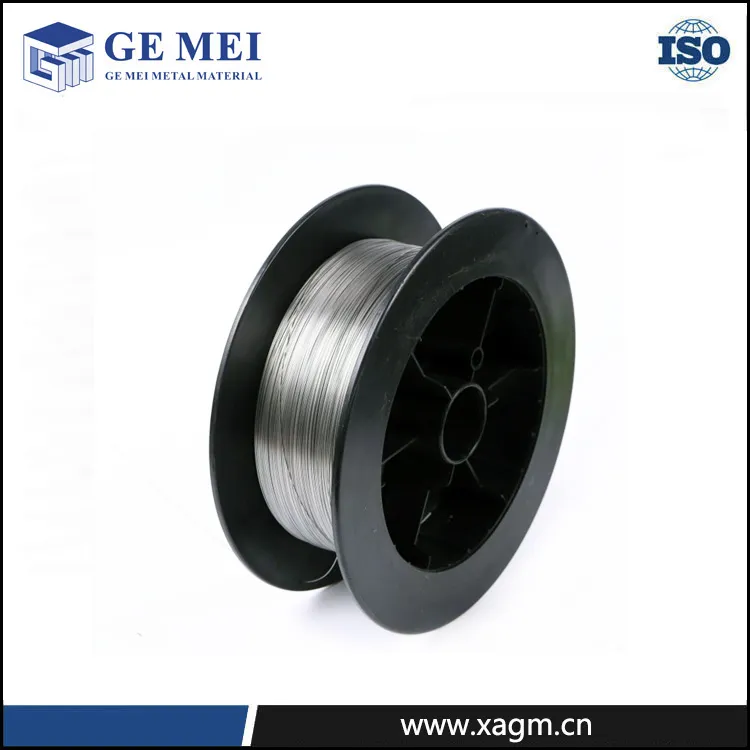
Spool packaging is usually suitable for fine wires or continuous long wires, as this packaging is conducive to stable unwinding and reduces unnecessary manual contact and operation.
Coil packaging is more suitable for tungsten wire with relatively larger diameters or applications that do not require automatic continuous feeding.
Specified cut packaging is suitable for situations where the tungsten wire is directly used for electrodes, supports, probes, or other processing parts after arrival.
For precision tungsten wire, packaging is not just a logistical issue. If the winding tension is unreasonable, excessive bending, contamination, or large displacement occurs during transportation, it may affect subsequent unwinding, feeding, or processing effects.
Therefore, when comparing different tungsten wire suppliers, procurement personnel should confirm besides the tungsten wire itself:
Spool or coil size
Net weight or length per package
Winding method requirements
Anti-pollution protection measures
Export packaging method
Label and batch identification information
If it is custom production, it is recommended to inform the supplier in advance how the tungsten wire will be unwound, straightened, cut, wound, or formed after arrival. This helps the supplier choose a delivery method that is more suitable for the actual production process.
How to Determine Tungsten Wire Specifications for Industrial Applications?
A complete inquiry form can help manufacturers accurately understand actual application needs before production.
For example:
Material: Tungsten wire
Diameter: Required diameter and tolerance
Condition: Required surface condition or processing state
Length: Continuous spool packaging or specified cut length
Working Environment: Vacuum, hydrogen, inert atmosphere, or other environments
Operating Temperature: Maximum operating temperature
Application: Heating elements, probes, supports, filaments, connectors, etc.
Packaging: Spool, coil, or specified cut
Quantity: Sample demand and annual purchase volume
Specifying the specific application is very important because tungsten wire may be used in very different working environments. GEMEI's tungsten wire products are applied in a range of incandescent and discharge lamp components, vacuum furnace heating elements, thermal field support structures, semiconductor probes, ion implantation-related components, and other special industrial parts.
This is especially important for high-temperature applications. For example, in some furnace applications, tungsten wire can be used as a heating element and related components in vacuum or hydrogen-protected environments.
Procurement personnel should also comprehensively evaluate the manufacturer's production capacity, quality control system, technical support capabilities, and the ability to maintain product consistency from the sample stage to continuous mass production.
GEMEI, established in 1995, is engaged in the production and R&D of tungsten, molybdenum, and related materials and has established a production system and professional technical team covering pressing, sintering, forming, and deep processing. If you have special requirements for tungsten wire diameter, grade, tolerance, or packaging method, you can submit drawings or technical specifications through Contact Us for further communication with us.
Conclusion
There is no universal tungsten wire specification that can be applied to all scenarios in industrial applications. The correct selection method is to reasonably match the grade, diameter, tolerance, surface condition, and packaging method based on the actual working environment and production process.
For high-temperature furnaces, electronics, semiconductors, lighting, and precision industrial applications, technical communication with manufacturers in the early stages of the project can also reduce over-design and lower the risk of problems with tungsten wire during forming, winding, installation, or mass production.
Therefore, an effective inquiry should not just ask "What tungsten wires do you have?" but should clarify: "What tungsten wire specifications are most suitable for this specific working condition?"
Frequently Asked Questions
What is the melting point of tungsten?
The melting point of tungsten is about 3422°C, which is one of the important reasons why it is suitable for extreme high-temperature environments.
How to choose the tungsten wire diameter?
It should be selected based on the required mechanical strength, resistance, flexibility, part size, and subsequent forming processing requirements.
Is thinner tungsten wire better?
No. Thin tungsten wire is suitable for miniaturized and precision applications, while thicker tungsten wire usually has better mechanical stability.
Can tungsten wire be customized in size?
Customization can be confirmed based on diameter, tolerance, material state, purchase quantity, and specific application requirements.
What information is needed when inquiring about tungsten wire?
It is recommended to provide diameter, tolerance, material requirements, length, surface condition, packaging method, quantity, working temperature, and final application.
 English