The processing state of tungsten rods affects more than just the appearance of the product. It also influences dimensional accuracy, surface quality, subsequent machining requirements, and the efficiency of processing the material into the final component.
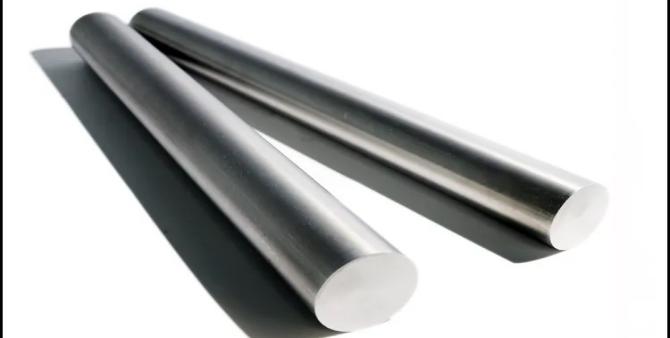
Tungsten rods are typically made from tungsten powder through pressing and sintering. Subsequently, they can be further processed through forging, swaging, or grinding based on the required diameter, tolerance, surface condition, and final application. Tungsten has a high melting point, high density, good strength, and thermal stability, making tungsten rods widely used in high-temperature, electrical, semiconductor, and other demanding industrial fields.
What do sintering, forging, swaging, and grinding of tungsten rods mean?
These terms mainly represent different processing stages or delivery states in the manufacturing process of tungsten rods, rather than four completely different materials.
| Status | Meaning | Reasons for Choosing This Status |
|---|
| Sintering | Tungsten powder is pressed and sintered under high-temperature conditions to densify | Suitable as larger size billets, subsequent processing materials, or machining blanks |
| Forging | Mechanical processing of the sintered billet to reduce or change its cross-section | Improves size control and allows further mechanical processing of the material |
| Swaging | Gradually reduces the rod diameter through radial repeated deformation | Suitable for smaller diameters and helps improve straightness and machining state |
| Grinding | Precision grinding of the outer diameter of the rod after prior processing | Achieves stricter diameter tolerances and a more uniform surface |
Due to tungsten's extremely high melting point, powder metallurgy is an important foundational process for processing tungsten materials. GEMEI introduces that its tungsten rods are produced using tungsten powder and can be further processed through forging, drawing, extrusion, rolling, and other processes. Other mature refractory metal manufacturing processes also typically use pressing, sintering, and subsequent mechanical processing to produce rods.
Grinding differs from the previous three states as it mainly belongs to the finishing process. Centerless grinding can remove the outer processing layer of the rod, usually used for products requiring more precise diameter control.
How does the processing state affect the performance and use of tungsten rods?
The appropriate processing state mainly depends on how much subsequent processing is needed after the customer receives the material.
Sintered tungsten rods are relatively close to the powder metallurgy billet state. If the purchaser needs to reserve a larger machining allowance or if the rod will undergo extensive secondary processing, the sintered state may be more suitable.
Forged tungsten rods are materials that have undergone further mechanical processing after sintering. Modern radial forging processes can process tungsten rods to the target diameter and achieve good size control.
Swaged tungsten rods gradually reduce in diameter through radial deformation. In the production of refractory metal rods, swaging is often an important process for further processing sintered billets into smaller, more stable rods.
Ground tungsten rods are usually more suitable for applications with high requirements for diameter consistency and surface quality. As less material may need to be removed in subsequent machining, it also helps simplify the production of precision components.
For customers purchasing pure tungsten rods, the real question is not just "should I choose sintered or ground state," but what level of dimensional control precision is needed for the final application and what other processing is required afterward.
According to information from GEMEI's tungsten rod product page, its pure tungsten rods typically have a purity of about 99.95% and can provide products with diameters up to 100 mm, with a focus on controlling rod diameter, roundness, tolerance, and straightness.
Which tungsten rod processing state should be chosen?
The appropriate state should be selected based on the final application and subsequent manufacturing processes.
For machining blanks:
If a lot of material needs to be removed during subsequent turning, drilling, or other machining processes, the sintered or forged state is usually more practical.
For high-temperature furnace components:
If heating elements, supports, or other thermal field components require good dimensional stability and structural reliability, tungsten rods that have been forged or otherwise mechanically processed may be considered. GEMEI's tungsten rods can be used for hot-processing equipment and high-temperature furnace-related components.
For electrical and semiconductor components:
When products have higher requirements for diameter consistency and surface quality, the swaged or ground state may be more suitable as raw material for precision components.
For precision finished parts:
If the drawings have strict requirements for outer diameter tolerance or if unnecessary machining allowance is to be minimized, ground tungsten rods can usually provide more suitable initial size and surface condition.
When purchasing, a simple principle can be followed: if a lot of subsequent machining will directly remove the existing surface, there is no need to pay extra for overly high surface precision; but if dimensional precision is already a key requirement in the subsequent production process, one should not choose an overly rough delivery state to save upfront costs.
What information needs to be provided before requesting a quote from a tungsten rod manufacturer?
An effective request for quotation should not only specify the type of tungsten rod needed but also let the manufacturer know how the material will be used and processed after delivery.
When contacting a tungsten rod manufacturer, it is recommended to clarify the following information:
Material purity or grade
Required diameter and diameter tolerance
Length and length tolerance
Sintered, forged, swaged, ground, or other specified state
Surface quality requirements
Straightness and roundness requirements
Purchase quantity
Operating temperature and usage atmosphere
Final application
Subsequent mechanical processing or manufacturing processes
For custom refractory metal products, this information is especially important because there is often a close relationship between processing technology, size requirements, and final application.
GEMEI has been engaged in the production of tungsten, molybdenum, and related materials since 1995 and has established production capabilities covering the processing of tungsten-molybdenum materials and the entire process quality control.
For custom tungsten rod projects, providing product drawings and the required material state during the inquiry can reduce unnecessary specification adjustments later. You can also submit target size, tolerance, purchase quantity, and application requirements through Contact Us to communicate further with the technical team.
Conclusion
Sintered, forged, swaged, and ground tungsten rods should not simply be understood as different surface treatment methods.
Sintering forms the most basic powder metallurgy billet of tungsten material; forging and swaging improve the size and processing state of the rod through further mechanical deformation; grinding focuses on achieving more accurate outer diameter dimensions and better surface quality.
The most economical choice is not the higher the processing grade, the better, but to avoid adding unnecessary finishing processes that the customer actually does not need while meeting the size and processing requirements needed for the next manufacturing process.
Frequently Asked Questions
What is a pure tungsten rod?
A pure tungsten rod is a rod-shaped material primarily composed of high-purity metallic tungsten, typically produced through powder metallurgy processes.
Is it difficult to machine tungsten rods?
Yes, pure tungsten has high hardness and is relatively brittle, so it is necessary to choose the appropriate machining method and tools.
What is the difference between a sintered tungsten rod and a swaged tungsten rod?
A sintered tungsten rod is a billet after densification through powder metallurgy, while a swaged tungsten rod has undergone further radial mechanical deformation.
Why do tungsten rods need to be ground?
Grinding can improve surface quality and achieve more precise diameter control.
Is a forged tungsten rod necessarily better than a sintered tungsten rod?
Not necessarily. The appropriate state should be chosen based on size requirements, machining allowance, and final application.
What information should be provided when requesting a quote for tungsten rods?
It is recommended to provide purity, diameter, tolerance, length, surface or processing state, purchase quantity, and final use.
 English