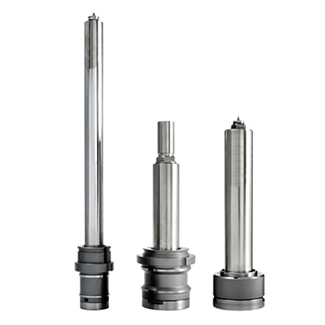
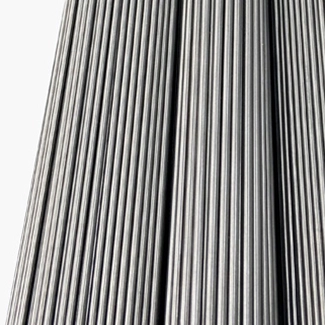
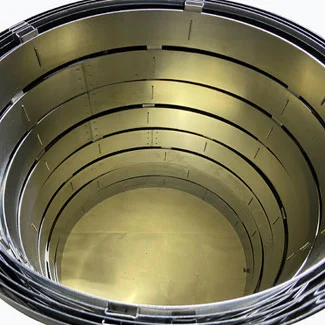
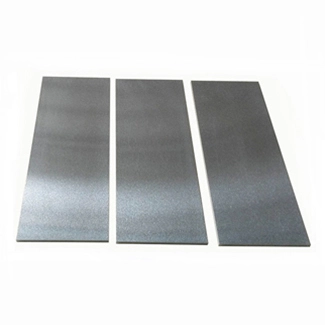
In advanced manufacturing environments, material selection depends not only on high-temperature resistance but also on its chemical compatibility, contamination control capabilities, and long-term stability in reactive environments. Tantalum is a key material widely used under such conditions, especially suitable for industrial systems with strong corrosive media and high purity requirements.
In fields such as semiconductor processing, glass and quartz manufacturing, sapphire crystal growth, and medical technology, tantalum is often integrated as a functional material into complex systems. In these applications, the material must remain stable in highly corrosive media, high vacuum, or high-purity environments. Grime Metal provides tantalum material solutions for system-level applications, ensuring they align well with high-precision industrial processes.
What is Tantalum: Functional Definition in Engineering Applications
From a materials science perspective, tantalum is a dense transition metal known for its excellent corrosion resistance. However, in engineering practice, "what is tantalum" is more about its performance in controlled and chemically active environments.
Tantalum can form a stable oxide film on its surface, which can effectively prevent further corrosion, keeping it stable in most acidic environments. Therefore, it is considered one of the most chemically stable metal materials in the industry.
Its main characteristics include:
High melting point (about 2996°C)
Strong corrosion resistance to acidic and reactive media
Stable surface condition in vacuum and controlled atmospheres
Good ductility, facilitating the processing of complex structures
Reliable stability in high-purity environments
Thus, "what is tantalum metal" is not only an elemental definition but also reflects its use as a highly stable engineering material in critical process systems.
Material Selection Logic Centered on Chemical Stability
Unlike many materials that are mainly selected based on temperature resistance, tantalum is often selected based on its chemical properties. In systems where corrosion or contamination may affect product quality, tantalum offers unique solutions.
Stability in Highly Corrosive Environments
Tantalum can resist:
Therefore, it is often used in components that are in direct contact with process media, such as containers, electrodes, and reaction interfaces.
Contamination Control in High-Purity Processes
In semiconductor and optical manufacturing, trace impurities can affect product quality. The advantages of tantalum include:
Low reactivity with process media
Stable surface, not prone to particle generation
Minimal compositional change during long-term use
These characteristics explain "what is tantalum used for," highlighting its critical role in high-purity industrial systems.
Performance in Vacuum and Controlled Atmospheres
In vacuum environments, tantalum has:
Therefore, it is suitable for key components in deposition equipment and vacuum systems.
Applications of Tantalum in Critical Industrial Systems
The application of tantalum is mainly concentrated in systems with extremely high requirements for chemical stability and process reliability.
Glass, Quartz, and Electrochemical Systems
In these fields, tantalum is mainly used for:
Corrosion-resistant electrodes
High-temperature containers
Structural components in contact with molten materials
Its inert characteristics prevent material contamination of processing media.
Semiconductor and Thin-Film Processes
Tantalum is widely used in:
Barrier layers in thin-film structures
Key components of vacuum equipment
Chemically stable conductive structures
These applications highlight the importance of "tantalum's uses" in electronics manufacturing.
Sapphire and High-Temperature Crystal Systems
During crystal growth, tantalum can be used for:
Structural components in reaction environments
Stable components in high-temperature zones
Transitional interfaces between different materials
Its stability helps maintain long-term process consistency.
Medical and Biocompatible Applications
Due to its good biocompatibility, tantalum is used for:
Its corrosion resistance ensures long-term safety.
Key Points for Tantalum Welding and Processing
Processing of tantalum requires strict control of process conditions, especially during welding. "Tantalum metal welding" demands a high environment because it easily reacts with gases at high temperatures.
Main process points include:
Welding in vacuum or inert gas environments
Preventing oxygen, nitrogen, and hydrogen contamination
Controlling heat input to avoid material performance degradation
Post-weld stress treatment
In engineering design, structures are usually optimized to reduce welding needs, with more emphasis on precision machining and assembly methods.
Why Choose Grime Metal's Tantalum Materials
In high-end industrial systems, material selection depends not only on performance parameters but also on whether the material can stably match actual working conditions. Grime Metal has obvious advantages in this regard.
Material Purity and Structural Stability
For semiconductor and high-purity system needs, Grime Metal focuses on:
Ensuring predictability in sensitive environments.
Engineering Application Material Matching
Tantalum materials provided by Grime Metal can meet:
Dimensional tolerance requirements of precision equipment
Adaptation to vacuum and reaction environments
Stability under thermal and chemical coupling conditions
Contributing to the direct application of materials in systems.
Processing and Manufacturing Capabilities
Tantalum processing is challenging, and Grime Metal has:
Precision processing capabilities for complex structures
Stable manufacturing process control
Customized component production capabilities
Reducing secondary processing pressure during equipment manufacturing.
Industry Application Experience
The fields Grime Metal serves include:
Semiconductor equipment
High-temperature furnace systems
Photovoltaics and crystal growth
Glass, quartz, and ceramic processing
Medical and precision engineering
Based on an understanding of actual working conditions, more targeted material solutions can be provided.
Conclusion
As an engineering material with excellent chemical stability, tantalum plays an irreplaceable role in modern industrial systems. Its core value is not only reflected in high-temperature resistance but also in corrosion resistance, low contamination characteristics, and long-term stability in controlled environments.
As manufacturing processes demand higher precision and environmental control, the application range of tantalum continues to expand, especially in highly corrosive and high-purity scenarios.
Through the engineering tantalum material solutions provided by Grime Metal, tantalum can achieve stable and reliable applications in complex industrial systems, providing a solid guarantee for critical manufacturing processes.
 English