For high-temperature fixtures, if the focus is on heat resistance, rigidity, and dimensional stability at extreme high temperatures, tungsten is usually a more suitable choice. If the fixture needs to balance high-temperature performance, lighter weight, repeated thermal cycling, and easier manufacturing, molybdenum is often more practical.
The correct material choice cannot be based solely on the highest temperature inside the furnace. The size of the fixture, mechanical load, number of thermal cycles, flatness requirements, complexity of processing, and working atmosphere all affect which refractory metal can achieve a better balance between performance and cost.
Is it better to use tungsten or molybdenum for high-temperature fixtures?
There is no absolute "better" between the two materials.
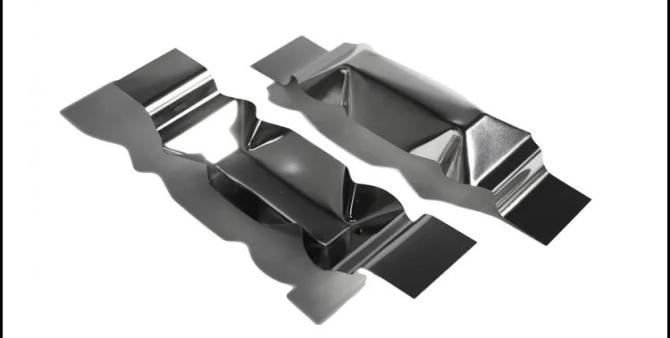
Tungsten is particularly suitable for extremely harsh high-temperature environments. GEMEI tungsten plates have a melting point of about 3422°C, a density of about 19.3 g/cm³, and good high-temperature performance. Products can be used in vacuum furnaces, sintering furnaces, and sapphire growth equipment for furnace beds, rails, heat shields, boats, and other high-temperature components.
Therefore, when the fixture needs to withstand harsh thermal loads, maintain high structural rigidity, or be used in high-temperature areas where ordinary metals can no longer maintain strength, tungsten plates are a material worth considering.
Molybdenum offers another performance balance. GEMEI emphasizes that molybdenum plates have good high-temperature rigidity, a lower thermal expansion coefficient, and thermal cycle stability, making them suitable for furnace frames, boats, heat shields, and sintering support plates.
For fixtures that require dimensional stability without the large weight and higher processing difficulty of tungsten, molybdenum plates are usually more attractive.
A basic comparison can be made as follows:
| Fixture Requirements | Tungsten | Molybdenum |
|---|
| Extreme High-Temperature Performance | Excellent | Excellent |
| High Structural Rigidity | Excellent | Very Good |
| Reducing Fixture Weight | Relatively Disadvantageous | More Advantageous |
| Thermal Cycle Stability | Very Good | Excellent |
| Complex Processing and Manufacturing | Higher Difficulty | Usually Easier |
| Furnace Frames and Boats | Applicable | Very Applicable |
| Extreme High-Temperature Areas | Significant Advantage | Needs to be Judged by Conditions |
The higher density of tungsten is also one of the important reasons why large fixture structures may prefer molybdenum.
How do temperature, weight, and thermal cycles affect material selection?
The highest temperature in the furnace is very important, but it should not be the sole criterion for material selection.
Temperature Resistance
Tungsten can withstand higher extreme temperatures. GEMEI's information shows that tungsten has a melting point of about 3422°C, and tungsten plates can be used in extreme high-temperature furnace environments exceeding 2000°C.
Therefore, for fixture components near the heating area or that need to withstand exceptionally harsh thermal loads, tungsten is particularly worth considering.
Molybdenum also has good high-temperature performance. GEMEI states that its molybdenum plates can maintain mechanical strength and geometric stability under sustained high-temperature loads and provide corresponding plate processing solutions for harsh high-temperature applications.
Therefore, the real question in engineering material selection should not be "which metal has a higher melting point," but whether the actual fixture truly needs the additional high-temperature performance provided by tungsten.
Fixture Weight
Tungsten has a density of about 19.3 g/cm³, giving it a large mass and good rigidity, but at the same time, the overall weight of large tungsten fixtures will also increase significantly.
For large furnace frames, carriers, heat shields, or multi-component combined fixtures, unnecessary weight may increase loading and unloading difficulty and impose additional loads on the support structure.
Therefore, when the actual conditions do not require the extreme temperature resistance level of tungsten, molybdenum with a lower density may be a more practical solution.
Thermal Cycling
High-temperature fixtures usually do not remain at a constant temperature. Repeated heating and cooling can cause dimensional changes and internal thermal stress.
GEMEI particularly emphasizes the low thermal expansion characteristics of molybdenum plates and their ability to resist deformation during thermal cycles.
For fixtures that need to undergo repeated heating and cooling processes, this may be as important as the maximum operating temperature.
Which material should be selected for different furnace fixture designs?
The geometric structure and actual function of the fixture often help engineers make choices more easily than simply comparing material parameters.
Heavy-duty support components and extremely high-temperature structural parts:
Tungsten is suitable for high-load furnace beds, rails, support plates, and structural parts near the highest temperature areas inside the furnace. GEMEI's tungsten plate applications include heat shields, furnace beds, rails, and boats.
Furnace frames, carriers, and sintering plates:
Molybdenum is very suitable for furnace beds, supports, boats, and sintering support plates that carry products during heat treatment. Good dimensional stability and flat plate structure make it suitable for repeated production cycles.
Heat Shields:
Both tungsten and molybdenum can be used for thermal shielding components. The specific choice should comprehensively consider the operating temperature, heat shield thickness, total fixture weight, required rigidity, and replacement cost.
Precision Fixture Plates:
If the product needs machined holes, slots, special cuts, bends, or other custom structures, processing difficulty becomes an important factor. GEMEI can provide laser-cut molybdenum plates, stamped blanks, pre-drilled plates, and bent parts according to technical drawings.
For many high-temperature furnace designs, not all components need to use the same refractory metal. Tungsten can be used for key parts with the highest temperature or mechanical load, while molybdenum is used in large support structures to reduce weight and increase processing flexibility.
What parameters should be specified when purchasing high-temperature furnace fixture plates?
If only the material name and thickness are provided during purchase, many important parameters will be left unspecified.
A more complete inquiry form is recommended to include:
Material and required purity
Plate thickness
Length and width
Dimensional tolerances
Flatness requirements
Surface condition
Hole, slot, or special cutout dimensions
Required machining or forming processes
Maximum operating temperature
Furnace atmosphere
Mechanical load
Thermal cycle frequency
Purchase quantity
Final fixture use
GEMEI states that its tungsten plates are usually made from tungsten materials with a purity of 99.95% or higher and can provide different surface or processing states such as sintering, rolling, grinding, and polishing.
For molybdenum products, GEMEI can provide Mo1 materials with a purity of 99.95%, as well as Mo-La and TZM materials for improved high-temperature performance, and supports hot-rolled, cold-rolled, and precision-finished plates.
GEMEI has been engaged in the research and manufacturing of tungsten, molybdenum, and related alloy products since 1995 and has the corresponding processing and production equipment and process quality control capabilities.
For custom high-temperature furnace fixtures, providing CAD drawings and specifying actual operating temperature, mechanical load, furnace atmosphere, and thermal cycle conditions during inquiry helps avoid unnecessary over-specification. For specific application requirements, you can submit drawings and technical parameters through Contact Us.
Conclusion
Tungsten and molybdenum are both refractory metals very suitable for high-temperature fixtures, but they address different engineering needs.
When extreme high-temperature resistance, rigidity, and high-temperature structural stability are the primary requirements, tungsten is especially suitable. For large furnace frames, carriers, sintering plates, heat shields, and other fixtures that focus more on thermal cycle stability, lower weight, and processing flexibility, molybdenum usually provides a more balanced solution.
Therefore, material selection should not be based solely on melting point. A more reasonable approach is to comprehensively evaluate the entire fixture system, including operating temperature, mechanical load, geometric structure, thermal cycles, furnace atmosphere, weight, machining requirements, and replacement plans.
The truly suitable material is one that meets actual performance requirements without incurring unnecessary costs and manufacturing complexities.
Frequently Asked Questions
Is tungsten more heat-resistant than molybdenum?
Yes. Tungsten has a higher melting point and is more suitable for extreme high-temperature environments.
Which is lighter, tungsten or molybdenum?
Molybdenum is lighter. Tungsten has a density of about 19.3 g/cm³.
Is molybdenum suitable for making high-temperature furnace fixtures?
Yes. Molybdenum is commonly used for furnace frames, boats, heat shields, supports, and sintering plates.
When should tungsten be chosen over molybdenum?
When extreme heat resistance, rigidity, or high-temperature structural performance are the main requirements, tungsten can be prioritized.
Can tungsten and molybdenum plates be custom processed?
Yes. Plate size, surface, shape, hole positions, and other structures can be customized according to application requirements.
What information should be provided when inquiring?
It is recommended to provide material, purity, size, tolerances, quantity, furnace temperature, working atmosphere, mechanical load, and available technical drawings.
 English