Tungsten & Molybdenum Rods Properties
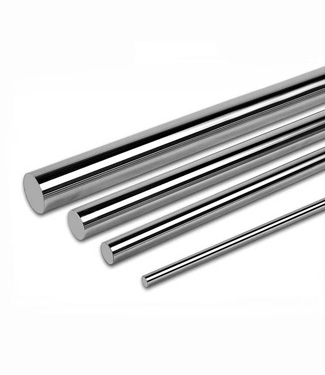
Tungsten and Tungsten Alloy Rods: Characterized by high melting point, high strength, low thermal expansion coefficient, and other properties.
Molybdenum and Molybdenum Alloy Rods: Possessing excellent high-temperature resistance, thermal conductivity, and electrical conductivity.
Tungsten & Molybdenum Rods Process Flow
Powder Metallurgy
This process consists of two steps: compaction and sintering. First, metal powders such as tungsten and molybdenum are placed into a mold and pressed to form a shape with a certain density. Then, the compact is placed into a high-temperature furnace for sintering, which forms a metallurgical bond between powder particles, thereby improving the density and strength of the rods.
Plastic Working
According to the product specifications and requirements, plastic working (such as swaging and rolling) is performed on the sintered rods. Through multiple rounds of swaging or rolling, the grain size can be further refined, and the density and mechanical properties of the rods are enhanced.
Heat Treatment
Heat treatment (such as stress relief annealing) is applied to the rods after plastic working to eliminate internal stresses generated during the processing, improving the dimensional stability and toughness of the rods.
Surface Treatment
To improve the surface quality and performance of the rods, surface treatment (such as polishing and coating) is also required.
Polishing: Removes defects like burrs and scratches on the rod surface, enhancing surface finish.
Coating: Improves properties such as corrosion resistance and wear resistance of the rods.
Tungsten & Molybdenum Rods Application Fields
Tungsten and Tungsten Alloy Rods: Widely used in fields such as semiconductors, electric light sources, and high-temperature furnaces.
Molybdenum and Molybdenum Alloy Rods: Commonly applied in industries including aerospace, electronics industry, and metal processing.
 English