
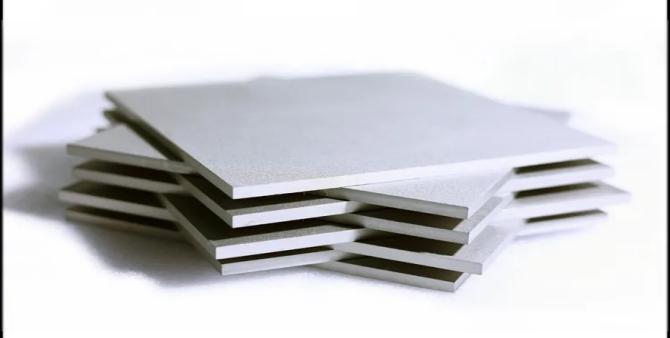
High Melting Point: Tungsten (3422°C) and molybdenum (2623°C) have extremely high melting points, enabling them to effectively resist high-temperature deformation.
Low Sputtering Rate: Under high-energy ion bombardment, atoms of tungsten and molybdenum are not easily sputtered out, resulting in a long service life. Even if sputtering occurs, the impact of their contaminants on the electrical properties of silicon wafers is relatively minor.
Good Thermal Conductivity: They can conduct heat effectively, preventing local overheating.
Relatively Low Vapor Pressure: They are not prone to volatilization in high-vacuum and high-temperature environments, maintaining the degree of vacuum.
Certain Corrosion Resistance: They exhibit relatively good resistance to halogen gases in particular (though they still corrode, their performance is better than that of most metals).
Tungsten: Features higher hardness and melting point, as well as better sputtering resistance. However, it is heavier, more brittle, more difficult to process, and more costly. It is often used in the most critical parts subjected to the most severe bombardment.
Molybdenum: Boasts excellent comprehensive performance, better processability than tungsten, and relatively lower cost. It is the most widely used refractory metal material in ion implanters, commonly applied in ion sources, suppressors, and slit assemblies.