
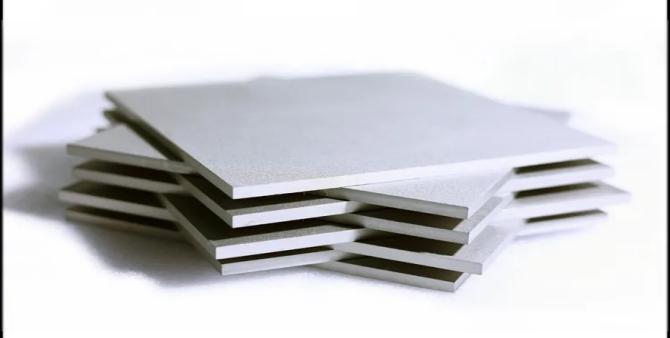
High Melting Point: Tungsten has a melting point of 3422°C, one of the highest among all metals, making it suitable for extreme high-temperature environments (typically usable at temperatures above 2000°C).
High-Temperature Strength: It retains relatively high mechanical strength even at high temperatures and is not prone to deformation.
Corrosion Resistance: It has good resistance to molten metals (such as aluminum and copper) and certain chemical vapors (such as carbon and sulfur).
Low Vapor Pressure: It is not easy to volatilize at high temperatures, making it suitable for vacuum or protective atmosphere environments.
Semiconductor Industry: Used in sapphire crystal growth (e.g., for LED substrates) and silicon wafer heat treatment.
Vacuum Coating: Serves as a carrier for evaporation sources in the evaporation of high-melting-point materials (e.g., gold, silver).
High-Temperature Sintering: Applied in the sintering of ceramics and cemented carbides (e.g., tungsten carbide).
High Melting Point: Molybdenum has a melting point of 2623°C, with a common operating temperature range of 1200–1800°C.
Excellent Thermal Conductivity: Its thermal conductivity is superior to that of tungsten, making it suitable for processes requiring rapid heat transfer.
Good Ductility: It is easier to process than tungsten at room temperature (can be stamped and welded).
Cost-Effectiveness: It is cheaper than tungsten and offers high cost performance.
Photovoltaic (PV) Industry: Used in sintering furnaces for solar cells (e.g., PERC technology).
Electronic Components: Applied in the sintering of magnetic materials and ceramic capacitors.
Evaporation Coating: Serves as an evaporation source for materials with medium and low melting points (e.g., aluminum, oxides).