
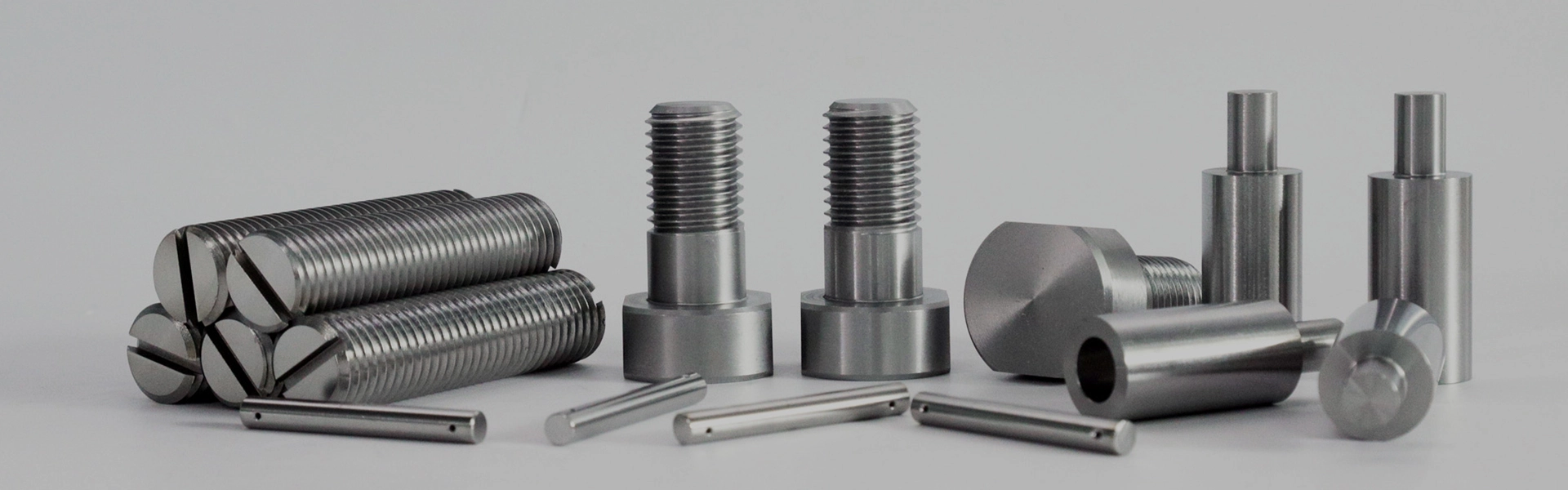
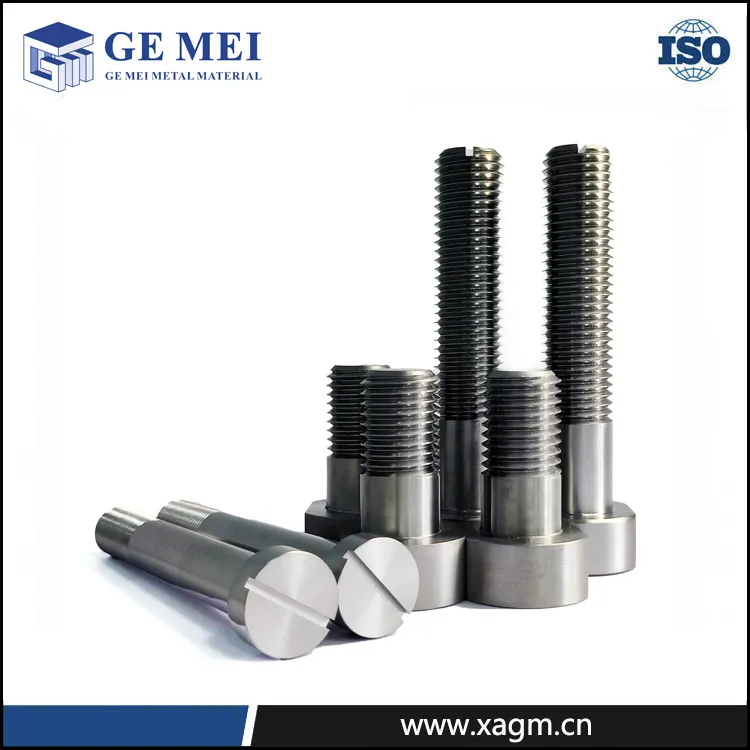
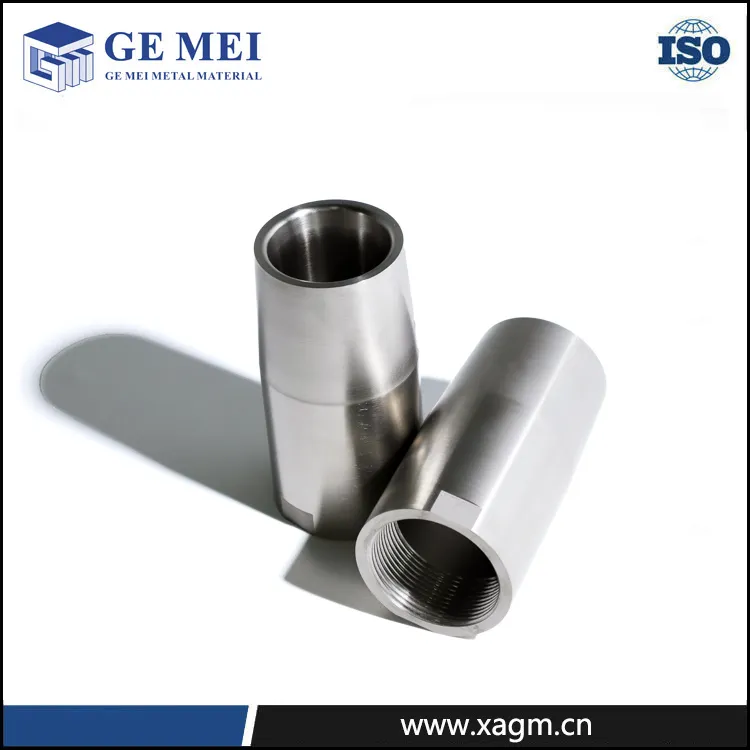
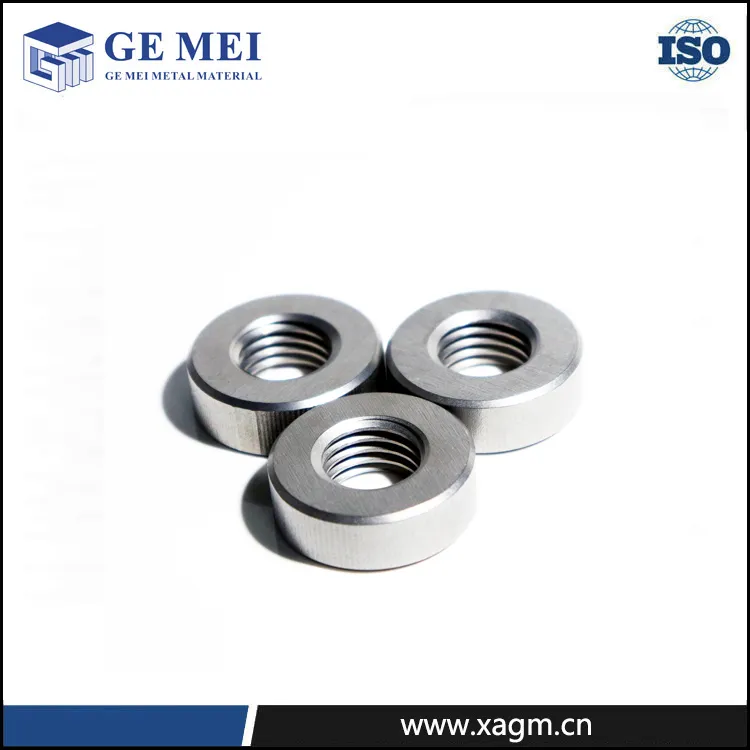

When connection and assembly work have to be performed under one or more of the following extreme conditions, conventional fasteners made of stainless steel, nickel-based alloys or even titanium alloys will fail, and molybdenum fasteners must be used instead:
Ultra-high temperature: Long-term operating temperature above 1000℃, or even as high as 1600℃–1800℃ (under inert atmosphere or vacuum).
Strong corrosion: Contact with molten glass, molten metals (e.g., zinc, aluminum, copper), or certain highly corrosive chemical media.
High vacuum/ultra-high vacuum: Requires extremely low outgassing rate and no contamination, so the material must have an ultra-low vapor pressure.
Special thermal matching requirements: Needs to be highly matched with the thermal expansion coefficient of connected components (e.g., other molybdenum parts, graphite, ceramics) to prevent huge stress caused by uneven expansion during thermal cycles.
Not all molybdenum fasteners are made of the same material; the selection should be based on specific requirements.
Material | Characteristics | Suitable Fastener Types & Application Scenarios |
Pure Molybdenum | Relatively low cost, excellent electrical and thermal conductivity, but significant room-temperature brittleness, prone to softening and recrystallization at high temperatures. | Gaskets, non-load-bearing locating pins or sleeves, electrical connection components. Applied in scenarios with low stress requirements but demanding heat resistance, corrosion resistance or electrical conductivity. |
TZM Alloy | The most widely used. High strength, high recrystallization temperature, and excellent creep resistance. It boasts the best comprehensive mechanical properties and is the first choice material for high-temperature load-bearing fasteners. | Main load-bearing bolts, nuts, main shafts, high-strength gaskets. Applied in the connection of core structures such as rocket engines and high-temperature furnaces. |
Molybdenum-Lanthanum Alloy | Has the strongest recrystallization resistance, maintains good ductility after long-term service at high temperatures, but its absolute strength is usually lower than that of TZM alloy. | Suitable for bolts, nuts and fasteners that work at high temperatures for a long time, undergo repeated thermal cycles, and have extremely high requirements for preventing brittle fracture.。 |
Molybdenum-Rhenium Alloy | Has the best ductility at room temperature and low temperatures, easy to process and install, but the cost is extremely high. | High-value components with strict requirements on installation ductility, such as connecting screws for precision components of spacecraft. |
Industry/Equipment | Molybdenum Fasteners Used | Main Reasons |
High-temperature Vacuum/Sintering Furnace | TZM bolts/nuts, molybdenum gaskets, molybdenum screws | High temperature resistance, no volatile contamination, thermal matching with graphite/molybdenum thermal field |
Single Crystal Growth Furnace | Molybdenum-lanthanum alloy bolts, molybdenum gaskets | Recrystallization resistance, dimensional stability under long-term high temperature, cleanliness |
Aerospace Engine | TZM/MHC high-strength bolts, special nuts | High-temperature strength, creep resistance, resistance to instantaneous ultra-high temperature |
Nuclear Reactor/Fusion Device | TZM bolts, sleeves | High temperature resistance, radiation damage resistance, low activation |
Special Chemical/Metallurgical Industry | Pure molybdenum or TZM bolts, nuts, gaskets | Resistance to erosion by molten metals or corrosive media |
High-end Electronic Equipment | Small-size molybdenum screws, gaskets | High thermal conductivity, low thermal expansion, excellent vacuum performance |