Tungsten Wire Applications
Lighting and Electro-vacuum Industry (Traditional Core Application)
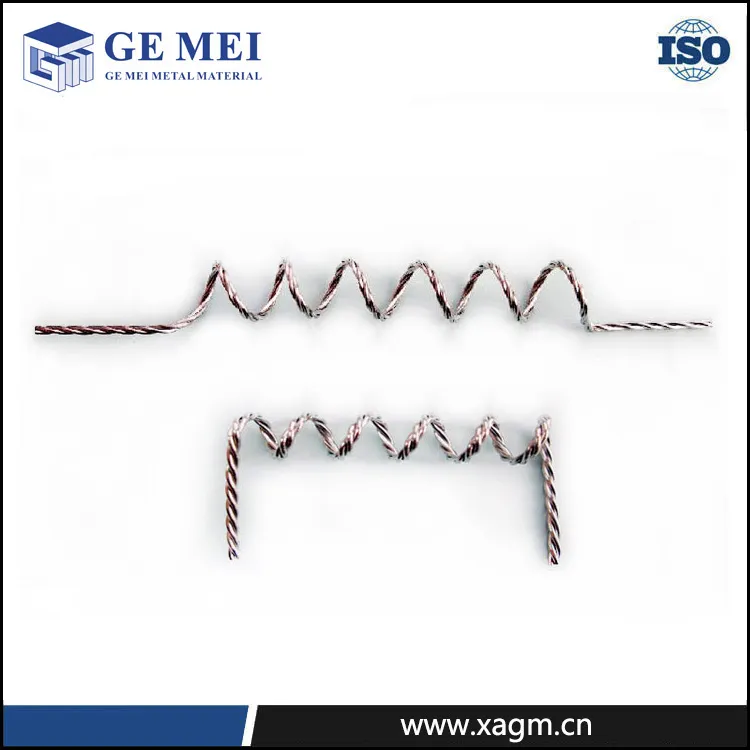
Incandescent/Halogen Lamp Filaments: Wound into single or double helix structures to reduce heat loss and improve luminous efficiency. The halogen regenerative cycle effectively slows down tungsten evaporation.
Gas Discharge Lamp Electrodes: Used in high-pressure sodium lamps, metal halide lamps, etc., serving as the core component for electron emission.
Heaters (Filaments) for Vacuum Tubes and Electron Tubes: Heat the cathode to enable electron emission.
High-temperature Industry and Heat Treatment
High-temperature Furnace Heating Elements: Wound into mesh or spiral shapes and used as resistance heating components in high-temperature furnaces under vacuum or hydrogen protection, with an operating temperature up to 3000°C.
Thermal Field Supports and Connectors: Applied in single crystal furnaces, sintering furnaces, etc.
Electronics and Semiconductor Industry
Semiconductor Device Gates: Used in some older or special electronic devices.
Probes and Connecting Wires: Applied for precision testing.
Ion Implanter Components: Withstand high-temperature and corrosive environments.
Additive Manufacturing (3D Printing)
Powder Spreading Blades for metal 3D printing technologies such as Electron Beam Melting (EBM) and Selective Laser Melting (SLM): Thanks to its high hardness, high-temperature strength and excellent wear resistance, it can stably push high-temperature metal powders.
Other Special Applications
Cutting Wires: Used as electrode wires in wire-cut electrical discharge machines for cutting cemented carbide, gemstones, etc.
Reinforcing Fibers for Composite Materials: Applied in the preparation of high-performance tungsten wire/superalloy composites.
Microscope Sample Holders.
String Cores for Musical Instruments (Guitars, Pianos): Provide high density and a unique timbre.
 English