Xi'an Gemei Metal Material Co., Ltd.

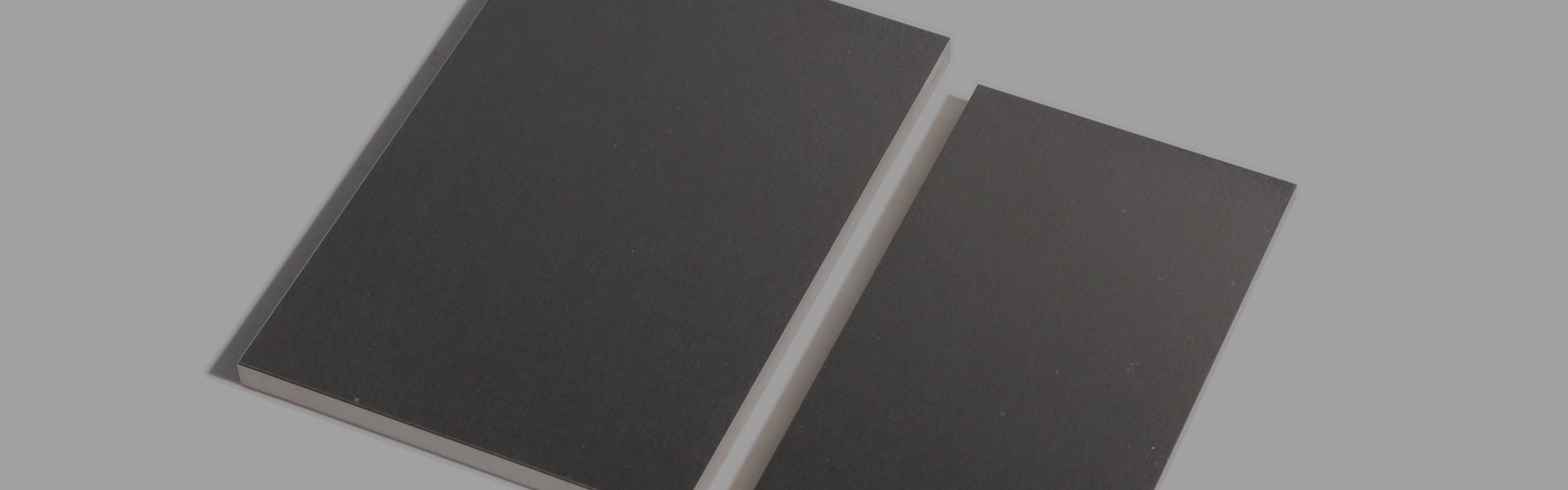
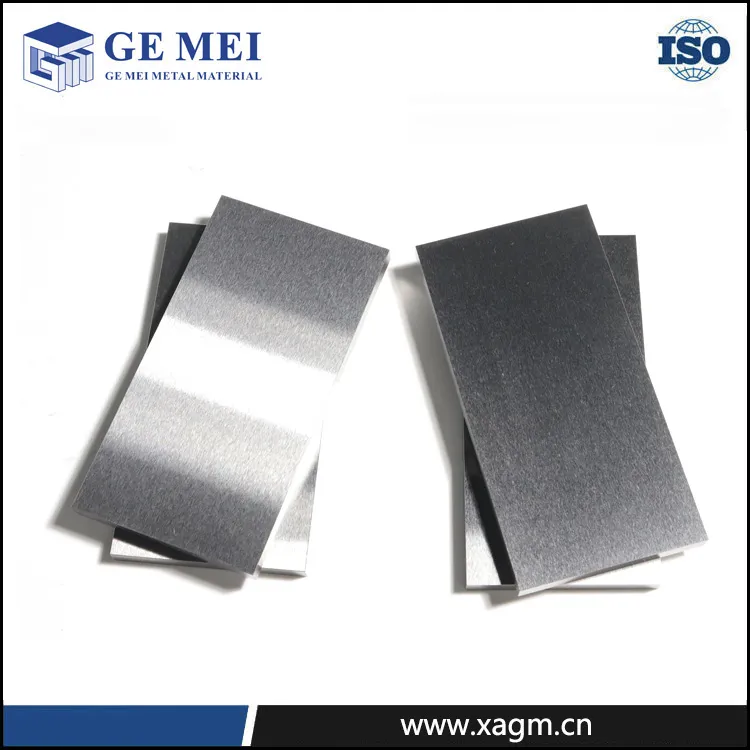
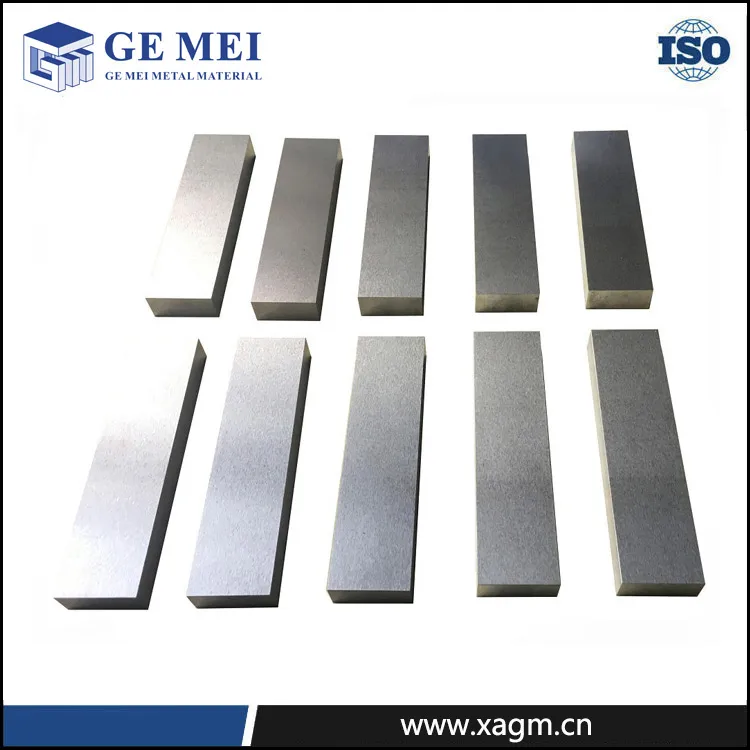
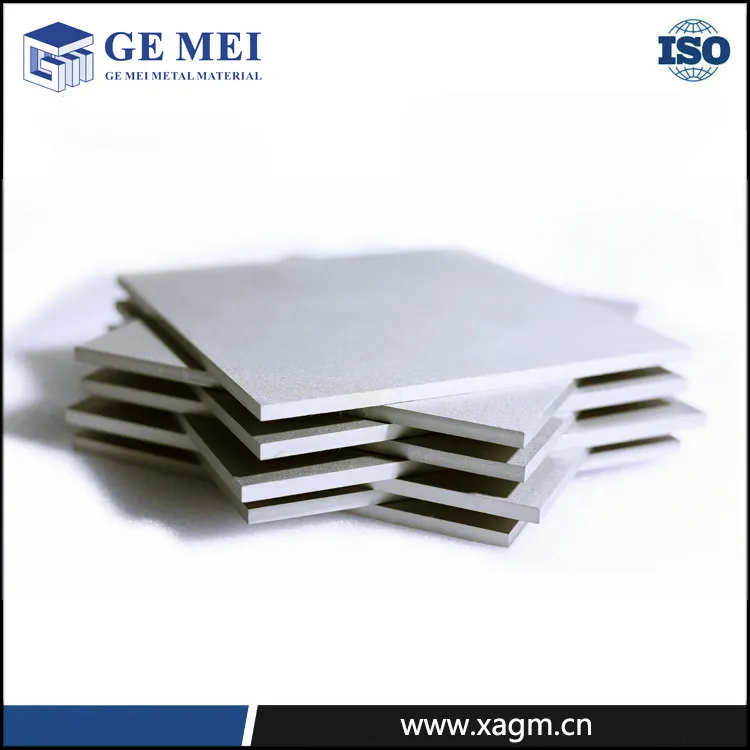
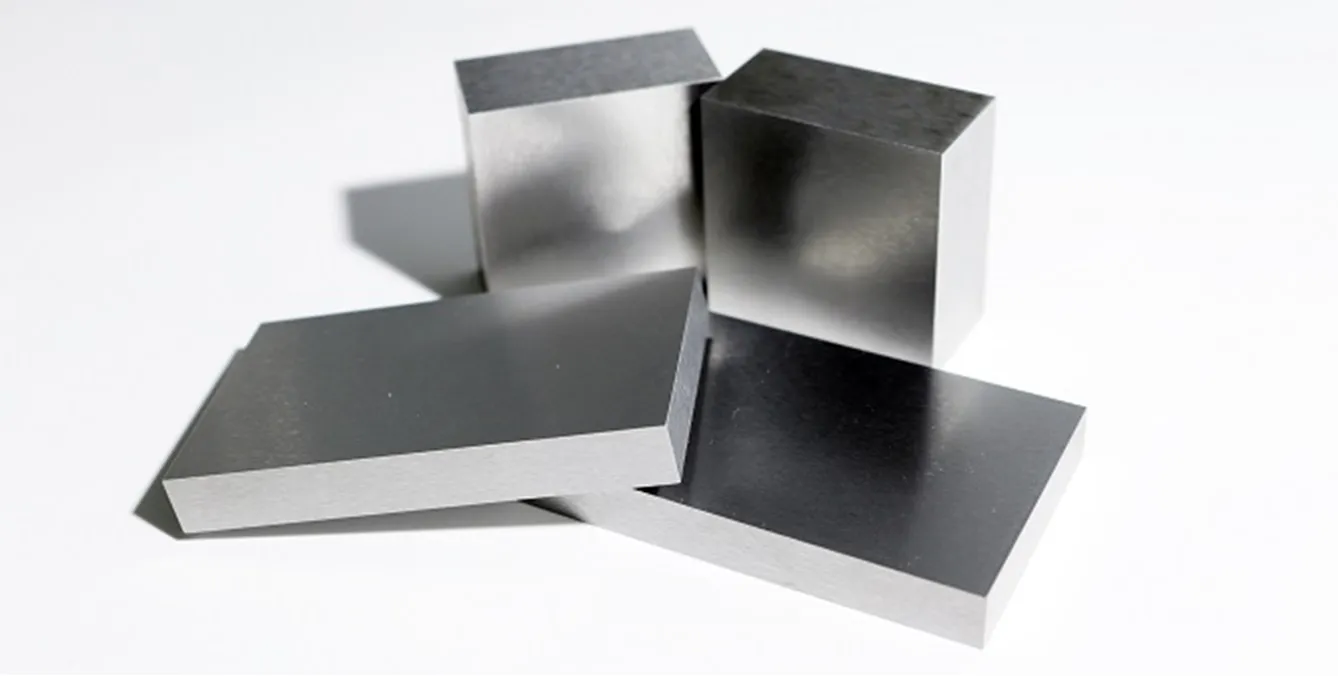
Tungsten plates are plate-shaped materials made from metallic tungsten (typically with a purity of 99.95% or higher) through processes such as powder metallurgy, rolling and forging. They embody the core excellent properties of tungsten metal and serve as key products for large-area, planar application requirements.

What is a Tungsten plate?

  • Extremely High Density: Approximately 19.3 g/cm³, 2.5 times that of steel, providing an excellent volume-to-weight ratio.

  • Extremely High Melting Point: 3422°C, the highest among all metals, maintaining shape and strength at high temperatures.

  • Excellent High-Temperature Strength: Retaining significant strength even above 1000°C.

  • Good Thermal and Electrical Conductivity.

  • Outstanding Corrosion Resistance: Resistant to erosion by most acids, alkalis and molten metals.

  • Excellent Radiation Shielding Capability: Shielding effectiveness against X-rays and gamma rays is far superior to that of lead.


Types of Tungsten Plates

Key Processes and Product Forms

Manufacturing Processes: Typically starting with high-purity tungsten powder, the blanks are produced through isostatic pressing and sintering, followed by high-temperature rolling (hot rolling) and possible subsequent warm/cold rolling to form plates. For products requiring high precision, precision grinding and polishing are performed.


Product Forms:

  • Thickness: Ranging from thin sheets of a few tenths of a millimeter to thick plates of several tens of millimeters.

  • Surface: Classified into sintered (rough), rolled (with metallic luster), ground (high finish), and polished (mirror-like) surfaces.

  • Shape: Primarily rectangular plates, which can also be cut into specific shapes such as circles and sectors as required.


Tungsten Plate Applications

Thanks to their large and flat form, tungsten plates are mainly used in scenarios requiring planar shielding, large-area high-temperature bearing, or serving as planar substrates.


Radiation Shielding Field (The Most Important and Unique Application)

  • Medical Equipment: Manufactured into protective liners, shielding 舱 doors and collimator blades for CT scanners, PET-CT systems and linear accelerators (radiation therapy equipment). Thanks to its high density, it can achieve equivalent shielding effectiveness in a thinner, stronger and more environmentally friendly way compared to lead.

  • Nuclear Industry and Scientific Research: Used as shielding components for nuclear reactors and nuclear waste containers, isotope production vessels, and shielding walls or blocks for particle accelerator experimental devices.

  • Industrial Testing: Applied in shielding structures of industrial CT and non-destructive testing equipment.


High-Temperature Furnaces and Heat Treatment Field

  • Furnace Internal Components: Used as heating elements, heat shields, furnace beds, guide rails and boats for vacuum furnaces, sintering furnaces and sapphire growth furnaces. Tungsten plates can withstand and operate stably in extreme environments above 2000°C.

  • Electron Beam Melting: Employed as liner plates for water-cooled copper crucibles in melting processes, resisting erosion by high-temperature molten metals.


Electronics and Semiconductor Industry

  • Semiconductor Manufacturing: Used as large sputtering target substrates for PVD (Physical Vapor Deposition) (often combined with other thin-film materials) in chip manufacturing.

  • Electronic Packaging: Employed as heat sinks (heat dissipation substrates) for high-power devices (e.g., IGBTs, lasers), leveraging their high thermal conductivity to dissipate heat rapidly.


Military and Aerospace

  • Counterweights and Balancing: Used as high-density counterweight blocks requiring planar layout in aircraft and satellites to optimize space utilization and center-of-gravity adjustment.

  • Special Structural Components: Applied in high-temperature parts such as the nozzle expansion section of rocket engines.


Other Industrial Fields

  • Wear-Resistant Liner Plates: Used as wear-resistant liners under harsh working conditions.

  • Electrode Materials: Applied in certain special electrical machining or electrochemical processes.

Get In Touch With Us
For Any Interested Tungsten and Molybdenum Solutions
  • 2026 New Factory Construction Plan
    2026-01-12
    2026 New Factory Construction Plan
    The new factory purchased 42 mu of land on January 1st, 2025. Currently, the factory buildings are under construction and will be officially put into production in March 2026. It will construct factor...
  • Introduction to molybdenum-rhenium Materials
    2024-08-01
    Introduction to molybdenum-rhenium Materials
    Gemei's molybdenum-rhenium materials are high-end alloy materials with high-temperature stability, excellent corrosion resistance and high strength. Inheriting the high melting point advantages of...
  • Introduction to MHC Materials
    2024-08-01
    Introduction to MHC Materials
    1. Performance Description1.1 Outstanding high-temperature mechanical properties: MHC materials (a type of high-performance metal matrix composite) maintain excellent tensile strength, creep resistanc...
  • Introduction to Gemei's TZM Alloy Materials
    2024-08-01
    Introduction to Gemei's TZM Alloy Materials
    1. Performance Description1.1 Excellent high-temperature mechanical properties: TZM alloy (titanium-zirconium-molybdenum alloy) maintains high tensile strength and hardness in high-temperature environ...
We use cookies to offer you a better browsing experience, analyze site traffic and personalize content. Part of the tracking is necessary to ensure SEO effectiveness,
By using this site, you agree to our use of cookies. Visit our cookie policy to learn more.
Reject Accept