Xi'an Gemei Metal Material Co., Ltd.

Tungsten heating element specifically refers to a core heating component that utilizes the resistance characteristics of metallic tungsten to directly convert electrical energy into extremely high-temperature thermal radiation energy (usually >1800°C, up to 3000°C or higher) through energization. It is the ultimate manifestation of tungsten material’s function as an "active heat source" and the "heart" of all high-temperature vacuum or protective atmosphere furnaces.

Tungsten Heater Core Definition and Value

  • Essence: A functional component that maximizes electrical, thermal, and material properties. It is not a simple container or structural part, but the core of energy conversion in the system.


  • Irreplaceability: When the process temperature exceeds 1800°C, especially when rapid heating, precise temperature control, high purity, and no pollution are required, tungsten heating elements are almost the only choice. Graphite heating elements have strong volatilization at high temperatures and may cause carbon contamination, while molybdenum heating elements have a lower melting point (approximately 2620°C).


  • Core Physical Basis: Leveraging tungsten’s high melting point, high resistivity, low vapor pressure, excellent high-temperature strength, and stable radiation characteristics, it can work stably and durably in an incandescent state when energized.

Gemei Tungsten Heater Gallery

  • tungsten heater element
    tungsten heater element
  • tungsten heater element
    tungsten heater element
  • tungsten heater element
    tungsten heater element

Tungsten Heater Key Characteristics

  • Ultimate Operating Temperature: The maximum operating temperature can reach 2800-3000°C (in vacuum or hydrogen atmosphere).

  • Extremely High Thermal Radiation Efficiency: At high temperatures, tungsten has a high emissivity, enabling efficient energy transfer in the form of thermal radiation.

  • Excellent High-Temperature Creep Resistance: It is not prone to elongation, sagging, or deformation under extreme temperatures, maintaining stable geometric shape.

  • Low Pollution: It has an extremely low evaporation rate under high vacuum, causing no contamination to heated materials or the furnace interior environment.

  • Rapid Heating and Cooling: Relatively low thermal inertia and fast response speed.

Common Morphologies and Manufacturing Processes

Common Morphologies (Designed Based on Furnace Types and Applications):

  • Tungsten Wire Heating Elements: Spiral or straight wire-shaped, used in small high-temperature tube furnaces and special light bulb filaments. Features: Easy resistance adjustment and uniform heating.

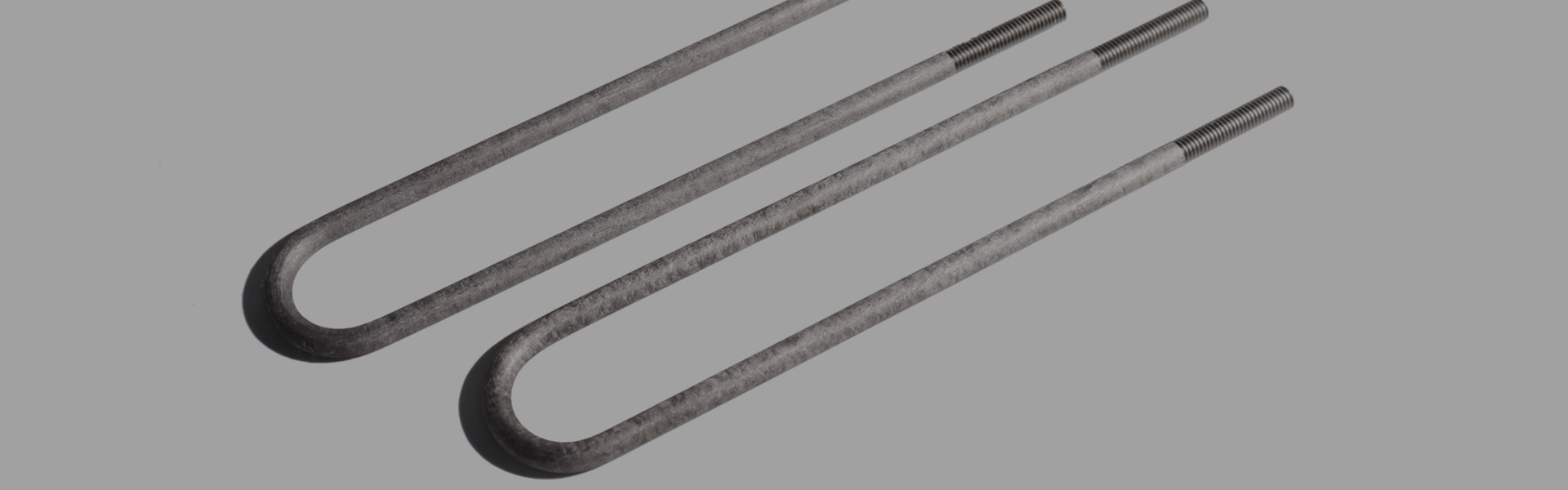
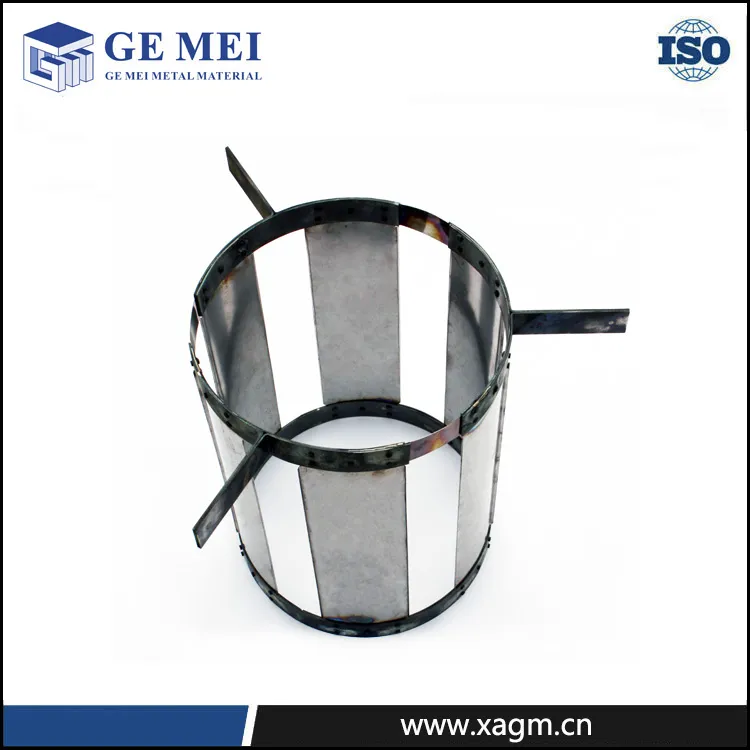
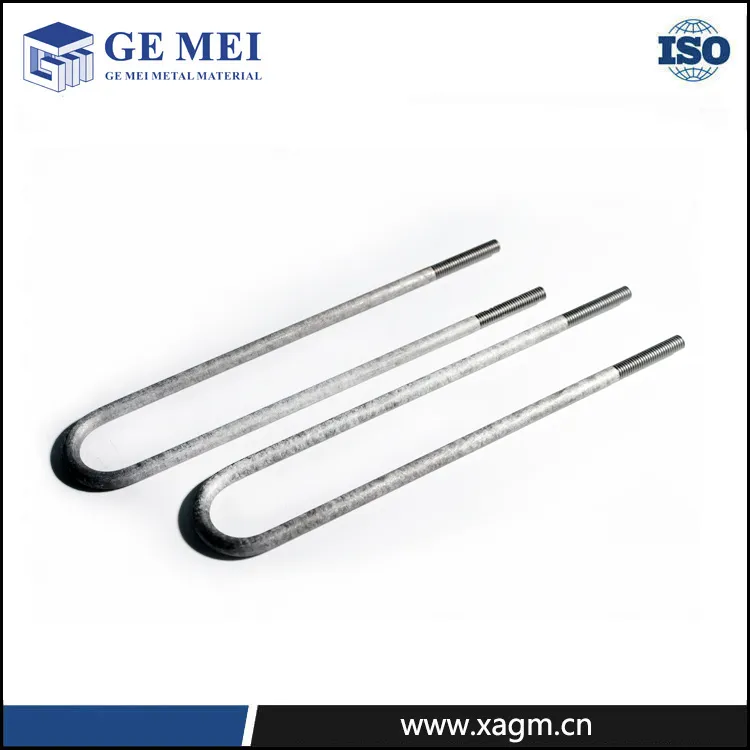
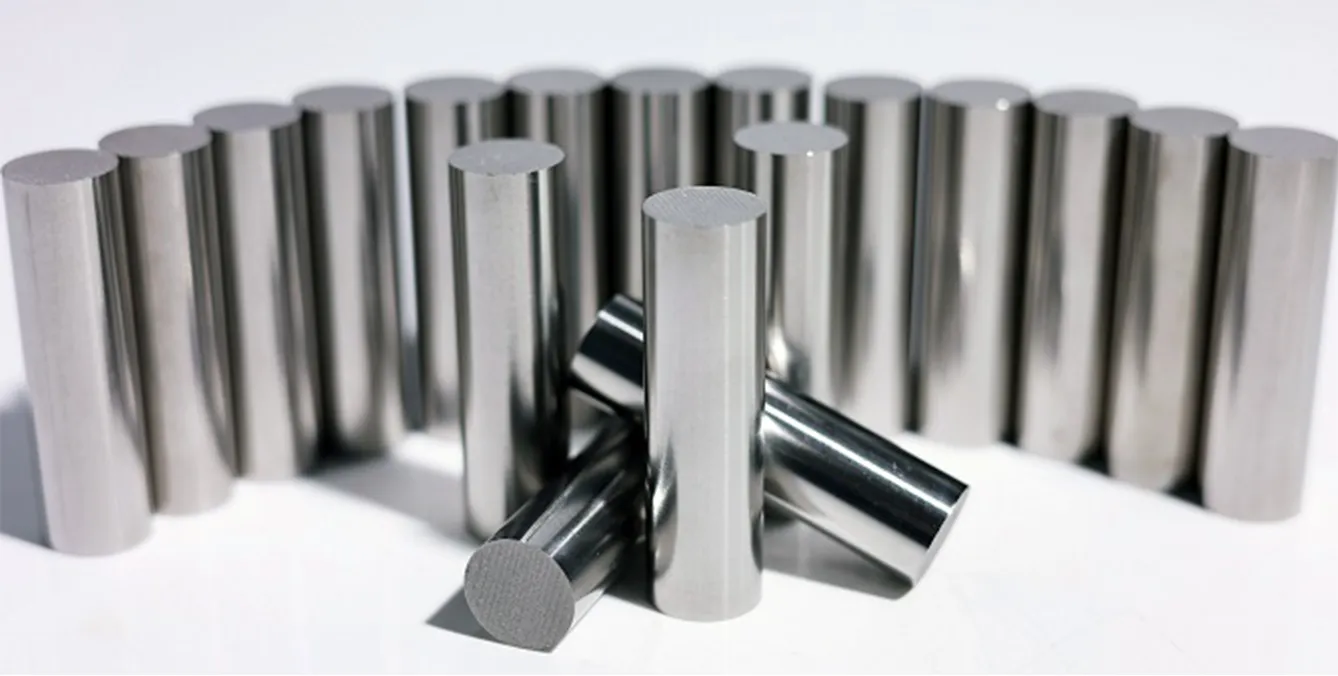
  • Tungsten Rod Heating Elements: Multiple straight or U-shaped rods connected in parallel to form a cage or mesh structure. Features: Robust structure and strong load-bearing capacity, commonly used in medium-sized vacuum/hydrogen sintering furnaces.

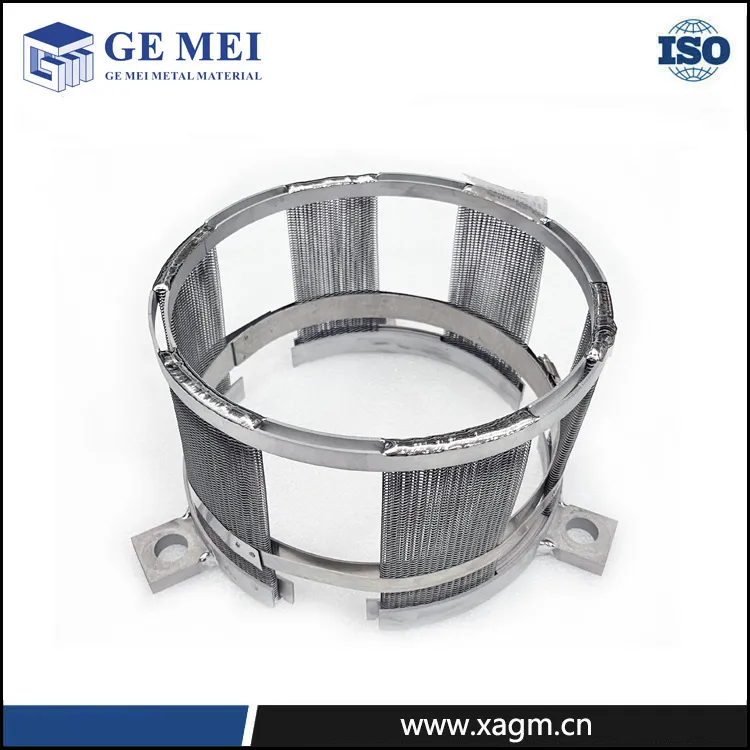
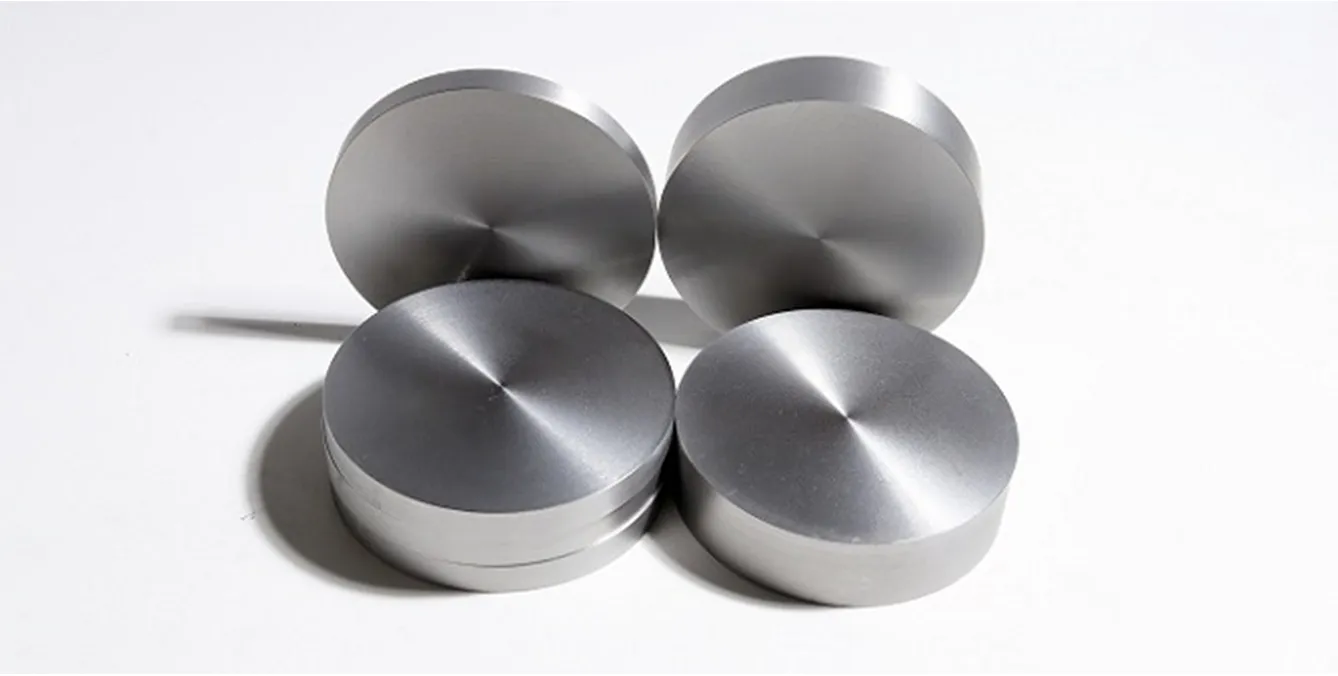
  • Tungsten Strip/Wafer Heating Elements: Thin tungsten strips processed into corrugated, mesh, or specific shapes. Features: Large heating area and uniform thermal radiation, often used in large-scale high-temperature furnaces (e.g., pusher kilns).

  • Customized Heating Elements: Complex structures designed according to specific furnace cavity shapes, such as cylindrical and box-type heating elements.


Manufacturing Processes:

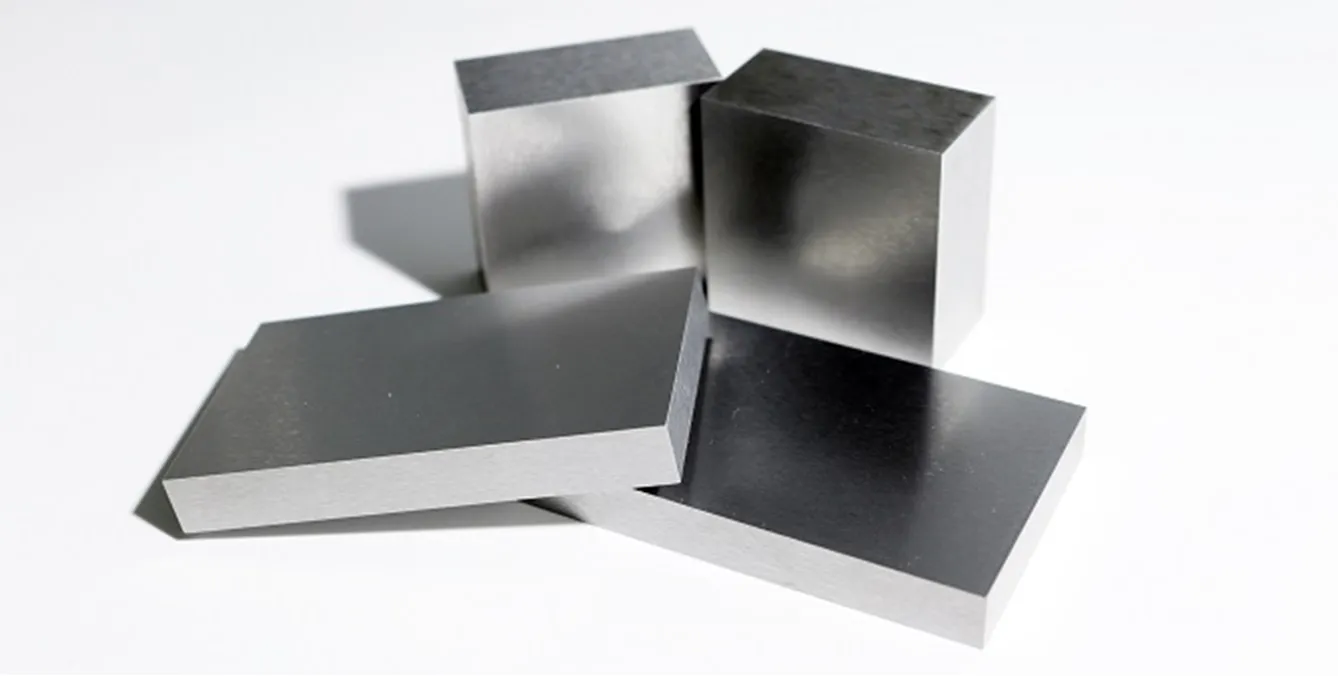
  • Based on rod, plate, and wire blanks obtained through powder metallurgy sintering.

  • Required semi-finished products are obtained via forging, rolling, wire drawing, and other processes.

  • Precision bending, welding, and assembly are performed to form the final heating element assembly.

  • Key Material: For applications requiring long-term sag resistance, doped tungsten (non-sagging tungsten) is the first choice. It can maintain a fibrous structure after recrystallization, with deformation resistance far exceeding that of pure tungsten.


Tungsten Heater Applications

Tungsten heating elements are the key to creating and maintaining an ultra-high-temperature and pure environment.


High-End Crystal Growth and Sintering

  • Sapphire Crystal Growth Furnaces: Provide the core thermal field for the Kyropoulos method (KY method).

  • Laser Crystal (e.g., YAG) Growth Furnaces: Supply a precisely controllable high-temperature heat source in the Czochralski method (CZ method).

  • Ultra-High-Temperature Ceramic Sintering: Vacuum sintering furnaces for materials such as transparent ceramics, aluminum nitride, and silicon carbide.


Vacuum Metallurgy and Refractory Metal Processing

  • High-temperature Vacuum Sintering Furnace: Used for the high-temperature sintering of powder metallurgy products such as tungsten, molybdenum, tantalum, niobium and so on.

  • Degassing, Annealing and Heat Treatment Furnace: Used for the high-temperature treatment of high-purity metals or alloys.


Semiconductor and Advanced Materials Preparation

  • Molecular Beam Epitaxy (MBE) Source Furnace: Used for heating evaporation source crucibles.

  • Chemical Vapor Deposition (CVD) Equipment: Provides high-temperature susceptor heating for depositing materials such as diamond and graphene.


Scientific Research and Standard Development

  • High-temperature Physical Property Testing Equipment: Serves as a heat source for measuring the properties of materials under extreme temperatures.

  • Blackbody Radiation Source: Utilizes its stable high-temperature radiation characteristics and acts as a standard light source for temperature calibration.


Get In Touch With Us
For Any Interested Tungsten and Molybdenum Solutions
  • 2026 New Factory Construction Plan
    2026-01-12
    2026 New Factory Construction Plan
    The new factory purchased 42 mu of land on January 1st, 2025. Currently, the factory buildings are under construction and will be officially put into production in March 2026. It will construct factor...
  • Introduction to molybdenum-rhenium Materials
    2024-08-01
    Introduction to molybdenum-rhenium Materials
    Gemei's molybdenum-rhenium materials are high-end alloy materials with high-temperature stability, excellent corrosion resistance and high strength. Inheriting the high melting point advantages of...
  • Introduction to MHC Materials
    2024-08-01
    Introduction to MHC Materials
    1. Performance Description1.1 Outstanding high-temperature mechanical properties: MHC materials (a type of high-performance metal matrix composite) maintain excellent tensile strength, creep resistanc...
  • Introduction to Gemei's TZM Alloy Materials
    2024-08-01
    Introduction to Gemei's TZM Alloy Materials
    1. Performance Description1.1 Excellent high-temperature mechanical properties: TZM alloy (titanium-zirconium-molybdenum alloy) maintains high tensile strength and hardness in high-temperature environ...
We use cookies to offer you a better browsing experience, analyze site traffic and personalize content. Part of the tracking is necessary to ensure SEO effectiveness,
By using this site, you agree to our use of cookies. Visit our cookie policy to learn more.
Reject Accept