Xi'an Gemei Metal Material Co., Ltd.

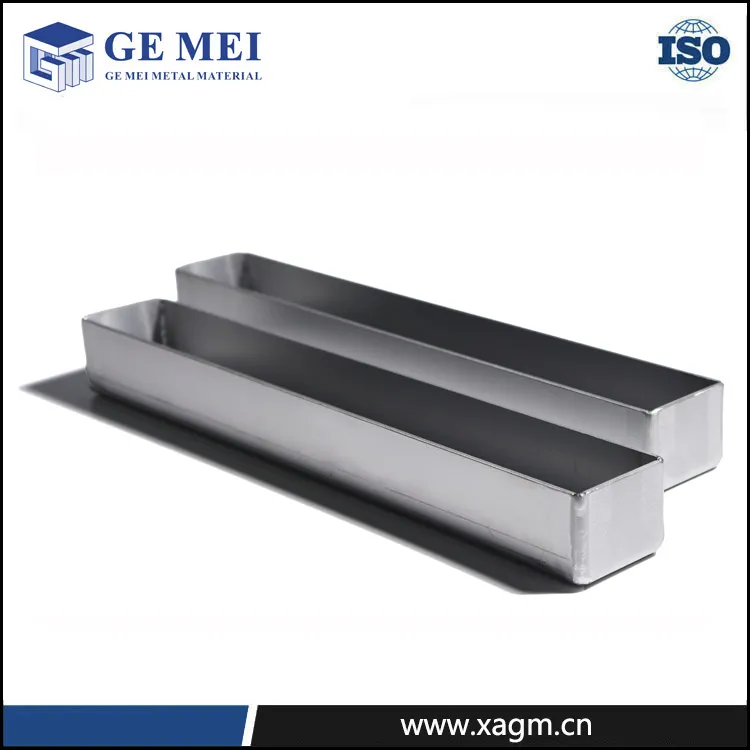
Tungsten Boat, also known as tungsten evaporation boat or tungsten heating boat, is a shallow boat-shaped or trough-shaped container made of metallic tungsten. It is specifically designed for high-temperature heating, evaporation, loading and other processes under vacuum or protective atmosphere, serving as a functionalized and refined form of tungsten material for specific thermal engineering applications.

Tungsten Boat Morphological Characteristics

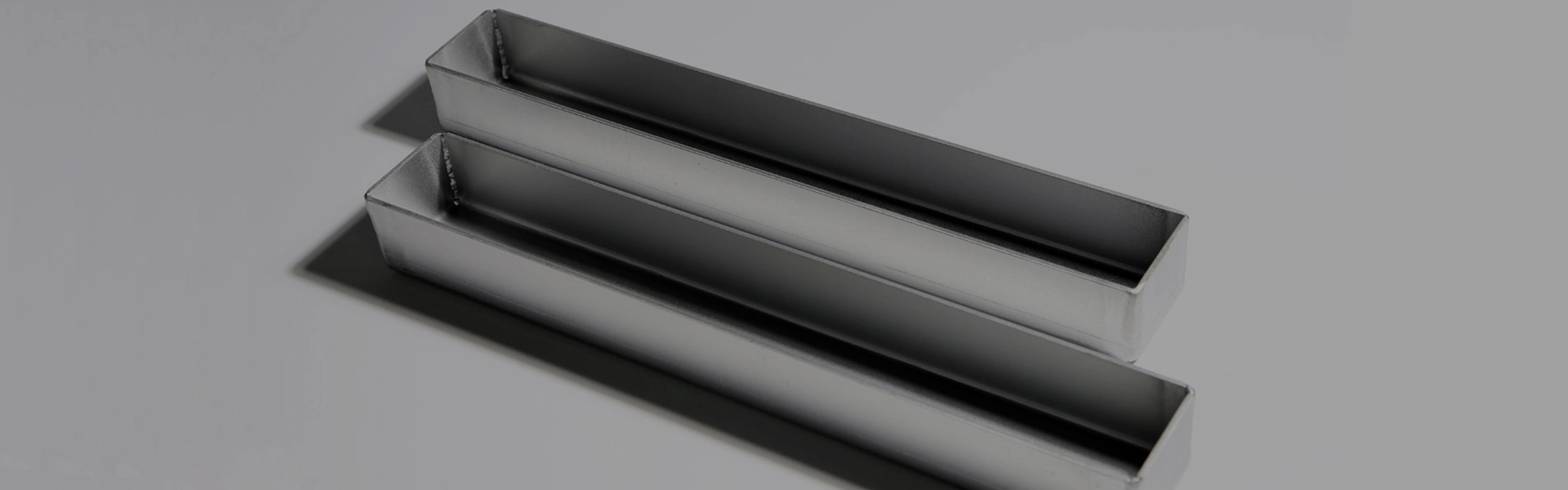
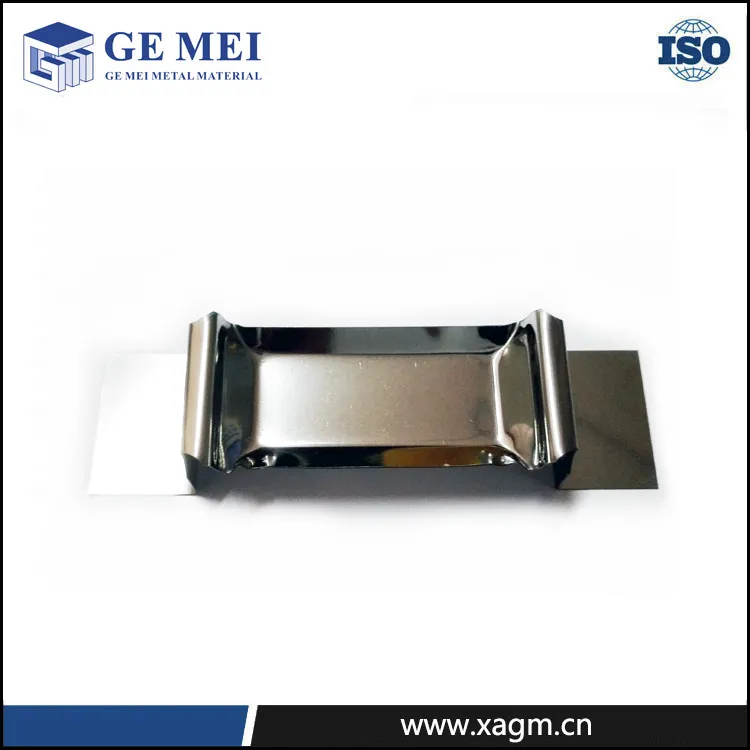
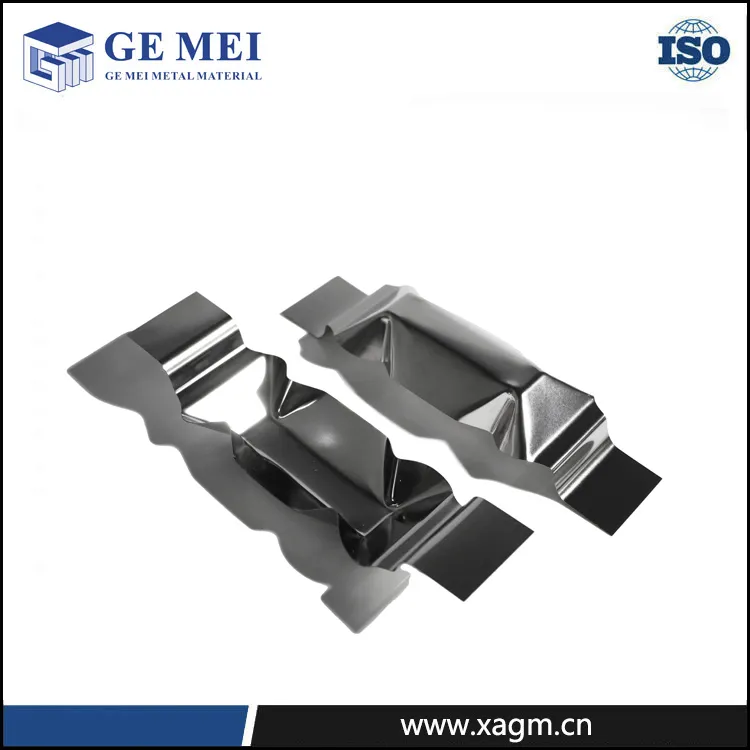
Morphology: Usually an open "boat-shaped" or "dish-shaped" structure. One side or both ends may be equipped with hooks or electrode connection structures for easy energization or suspension.

Functional Positioning: It lies between tungsten sheets (serving as planar substrates) and tungsten crucibles (serving as closed/deep-cavity containers). It focuses more on being an open heating carrier that facilitates material feeding and vapor escape.

Core Characteristics: On the basis of inheriting all the excellent properties of tungsten, it specifically emphasizes:

  • High Thermal Stability: Capable of withstanding rapid heating to extremely high temperatures (usually above 1700°C).

  • Good Thermal Shock Resistance: Adapts to cycles of rapid heating and cooling.

  • Precise Resistance Characteristics: Its resistance value can be controlled through specific designs (such as thickness and shape), facilitating precise resistance heating.

  • High Purity and Low Outgassing: Ensures no contamination of heated materials when working in vacuum environments.

Types of Tungsten Boats

Tungsten Boat Manufacturing Processes and Main Types

Manufacturing Processes:

  • Stamping Forming: Rolled tungsten sheets are stamped into boat shapes using precision molds. It is the most common manufacturing method, suitable for standardized and mass production.

  • Powder Metallurgy Sintering: For thicker or complex-shaped boats, powder compaction followed by sintering is adopted.

  • Machining: For boats with special dimensions or complex connection structures, CNC machining or wire cutting is performed on tungsten plates.


Main Types:

  • Standard Resistance Heating Boats: The most common type, with "ears" or extended parts at both ends for clamping and energization. Joule heat is generated directly by electric current flowing through the boat body.

  • Tungsten Boats for Induction Heating: Featuring a simpler shape, usually without special electrode structures, they are heated by being placed in induction coils.

  • Coated/Composite Boats: The surface is coated with an anti-oxidation layer (e.g., silicon carbide), or they are made into tungsten-molybdenum or tungsten-rhenium composite boats to improve specific properties (such as cyclic oxidation resistance and ductility).


Tungsten Boat Applications

The application of tungsten boats is highly concentrated in industrial processes that require rapidly heating small amounts of materials to evaporation or reaction temperatures in a vacuum.


Vacuum Coating and PVD (Physical Vapor Deposition) (Core Application):

  • Evaporation Source: Used as resistance evaporation sources to hold evaporation materials such as gold, silver, aluminum, chromium, and zinc sulfide. Under high vacuum, electric current is applied to heat the tungsten boat itself to an incandescent state, causing the coating materials inside to melt and evaporate rapidly, thereby depositing a film on the substrate. It is widely used in optical coating, decorative coating, microelectronic device coating, and other fields.


Semiconductor and Microelectronic Manufacturing:

  • Diffusion/Doping Source Boat: In high-temperature diffusion furnaces, it holds solid doping sources (such as oxides of boron and phosphorus), allowing them to release impurity atoms to silicon wafers at high temperatures.

  • MOCVD (Metal-Organic Chemical Vapor Deposition) Precursor Heater: Used to heat certain liquid or solid precursors that require precise temperature control, enabling their vaporization.


Material Processing and Analysis:

  • High-Temperature Heat Treatment: Used to hold small samples for annealing, sintering or heat treatment in vacuum or protective atmosphere furnaces.

  • Spectral Analysis: Serves as electrodes or sample carriers for emission spectroscopy or mass spectrometry analysis.


Scientific Research:

Used for laboratory-scale high-temperature chemical reactions, material synthesis, or physical property testing.


Get In Touch With Us
For Any Interested Tungsten and Molybdenum Solutions
  • 2026 New Factory Construction Plan
    2026-01-12
    2026 New Factory Construction Plan
    The new factory purchased 42 mu of land on January 1st, 2025. Currently, the factory buildings are under construction and will be officially put into production in March 2026. It will construct factor...
  • Introduction to molybdenum-rhenium Materials
    2024-08-01
    Introduction to molybdenum-rhenium Materials
    Gemei's molybdenum-rhenium materials are high-end alloy materials with high-temperature stability, excellent corrosion resistance and high strength. Inheriting the high melting point advantages of...
  • Introduction to MHC Materials
    2024-08-01
    Introduction to MHC Materials
    1. Performance Description1.1 Outstanding high-temperature mechanical properties: MHC materials (a type of high-performance metal matrix composite) maintain excellent tensile strength, creep resistanc...
  • Introduction to Gemei's TZM Alloy Materials
    2024-08-01
    Introduction to Gemei's TZM Alloy Materials
    1. Performance Description1.1 Excellent high-temperature mechanical properties: TZM alloy (titanium-zirconium-molybdenum alloy) maintains high tensile strength and hardness in high-temperature environ...
We use cookies to offer you a better browsing experience, analyze site traffic and personalize content. Part of the tracking is necessary to ensure SEO effectiveness,
By using this site, you agree to our use of cookies. Visit our cookie policy to learn more.
Reject Accept